Scientific analysis
Systematising concepts, examining historical development and critically evaluating published evidence.
 HAPPY LIFE INSTITUTEFOR DIRECT CHANGE SCIENCE
Science · Practice · Human Development
We study how human change emerges, how it is measured and under which conditions it persists.
Scientific publicationsAbout the Institute
The Institute develops research and analytical work focused on human change. It connects reviews of existing evidence with the development of questions, methods and programmes for future research.
Our focus includes behaviour, well-being, relationships, learning and professional development. Each approach is considered in light of the available data, its scope and its limitations.
Mission and public contribution
The Institute's mission is to develop and disseminate verifiable knowledge about human change. Its research scope includes personal and professional development, well-being, relationships and learning.
Systematising concepts, examining historical development and critically evaluating published evidence.
Formulating testable questions, predefined procedures and indicators for evaluating outcomes.
Publishing reports, scientific articles and methodological materials for researchers, practitioners and the public.
The term describes a research focus on targeted approaches to specific change. The speed, effectiveness and durability of outcomes are questions for empirical investigation, rather than guaranteed properties.
Founder
Psychologist, researcher, educator and author. Founder of Happy Life Academy and Happy Life Institute for Direct Change Science.
Her research interests include human transformation, identity, autobiographical memory, well-being and the application of knowledge about change to personal and professional development.
Research programme
What mechanisms connect awareness, decisions and observable behaviour?
How do outcomes persist after a programme ends, and what roles do environment and practice play?
Which outcomes are supported by data, for which groups and under which conditions?
How can we distinguish subjective experience, behavioural change and long-term effects?
Research question → literature analysis → research protocol → data collection and analysis → scientific review → publication and follow-up.
Organisation of our work
The founder sets the strategic direction. Research projects require clearly identified responsibilities for methodology, analysis, editing and publication.
Editorial decisions on work by the founder or editorial members are assigned to an independent editor and reviewers without conflicts of interest. Names and affiliations of the research and editorial team will be published once participation is confirmed.
Guidelines and editorial principlesScientific programme
History, concepts, practices, professional standards and evaluation of scientific evidence.
Developing research protocols to evaluate outcomes and follow them over time.
Describing procedures and translating research findings into accessible materials for practitioners and the public.
Publication programme
An analytical report series. Full texts and bibliographic records will be added after final editing and verification.
Concepts, practices, identity and scientific evidence. An international analytical review with a structured literature search.
An international analytical report with a focus on Bulgaria.
An analysis of the term's usage, related practices and questions for future scientific investigation.
Scientific journal
We are preparing a scientific journal on human change and development. Its planned scope includes original studies, analytical reviews and methodological publications.
The proposed editorial model includes preliminary screening and double-anonymous review by at least two independent specialists. Submissions will open once the editorial team is confirmed. Read the draft policy.
Identifiers will be displayed once officially assigned. This site currently does not claim a registered ISSN or an active DOI registration service.
Author guidelines and the draft editorial policy are available for review. Manuscript submissions are not yet open.
Research principles
Describing questions, sources and analytical methods so readers can assess the basis of the conclusions.
Distinguishing established findings, preliminary observations and hypotheses.
Clearly identifying authors' contributions and their relationships with the methods and programmes discussed.
Traceable versions, corrections and accessible bibliographic information for scientific work.
Institute identity
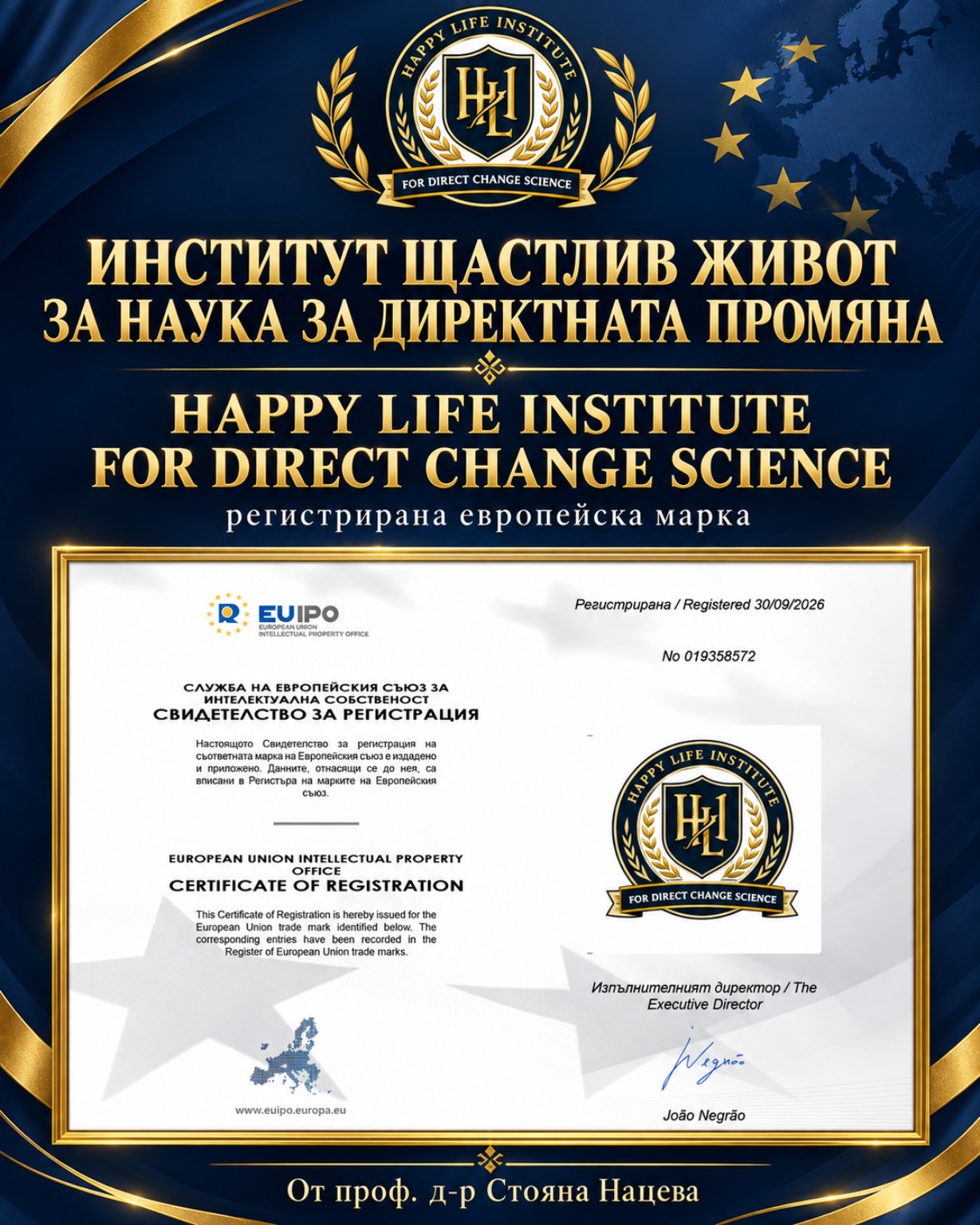
Happy Life Institute for Direct Change Science
EUIPO · No. 019358572 · 30 September 2026
The emblem and name form a shared identity for the Institute and its scientific publications.
View the supplied certificate